Product Case Study · Agile Delivery & Predictive AI
Replacing sprint guesswork with real capacity.
From a Kalpita hackathon build to Kalpita SprintMind: a fully developed AI capacity-planning and sprint-intelligence product that computes true team availability and flags delivery risk before a sprint breaks.

30–50%
less sprint-planning effort
20–35%
better estimation accuracy
25–40%
fewer sprint spillovers
15–30%
better resource utilization
Overview
Six things SprintMind changes about sprint planning
Capacity from evidence, not assumptions.
SprintMind computes real availability from meetings, leaves, holidays, and allocation percentages.
One accurate view.
It integrates Azure DevOps and calendar systems into a single picture of team capacity and sprint readiness.
Risk seen early.
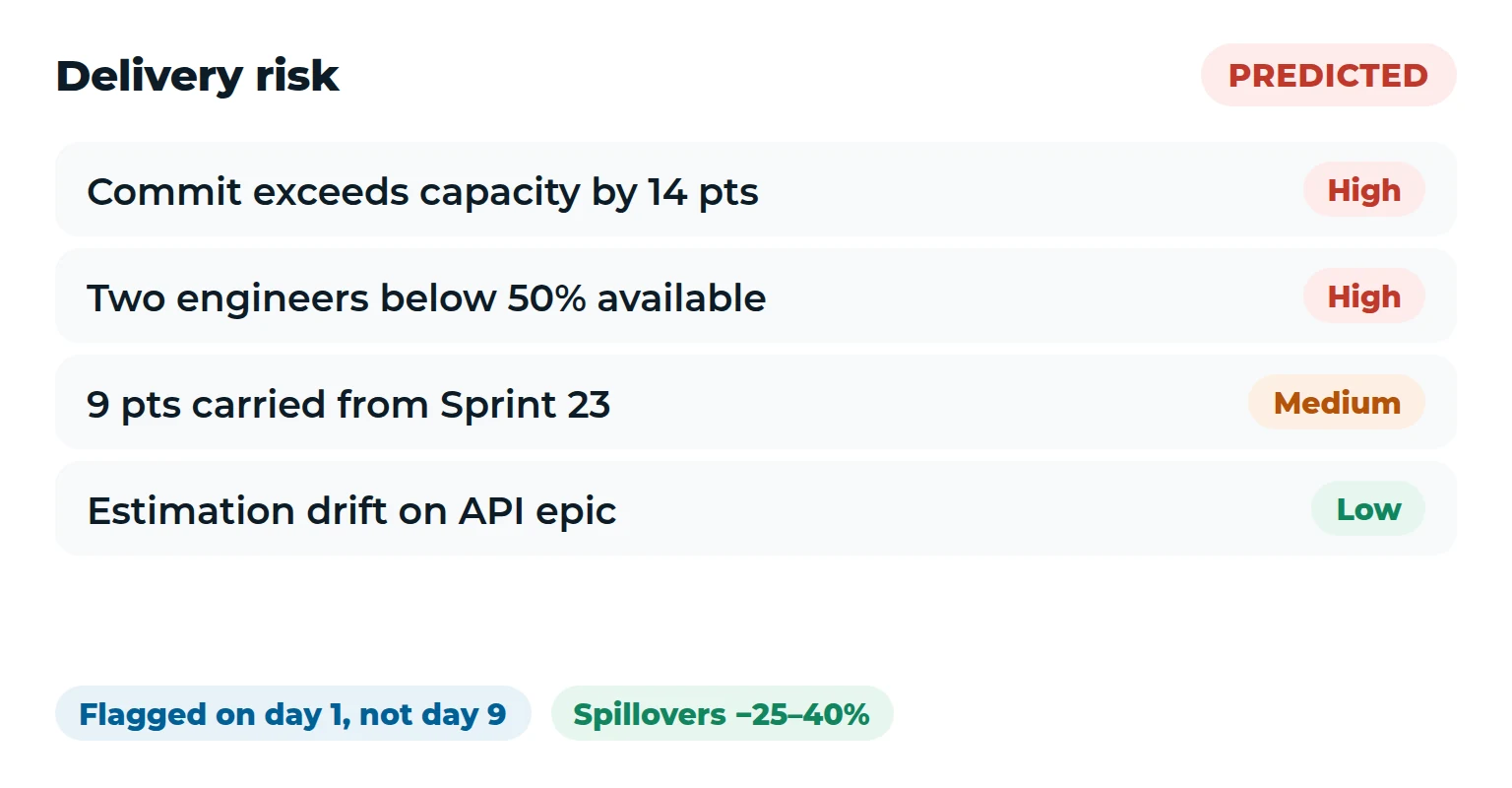
Predictive analytics flag overloaded resources, capacity gaps, estimation deviations, and likely delays before they hit delivery.
Recommendations, not just dashboards.
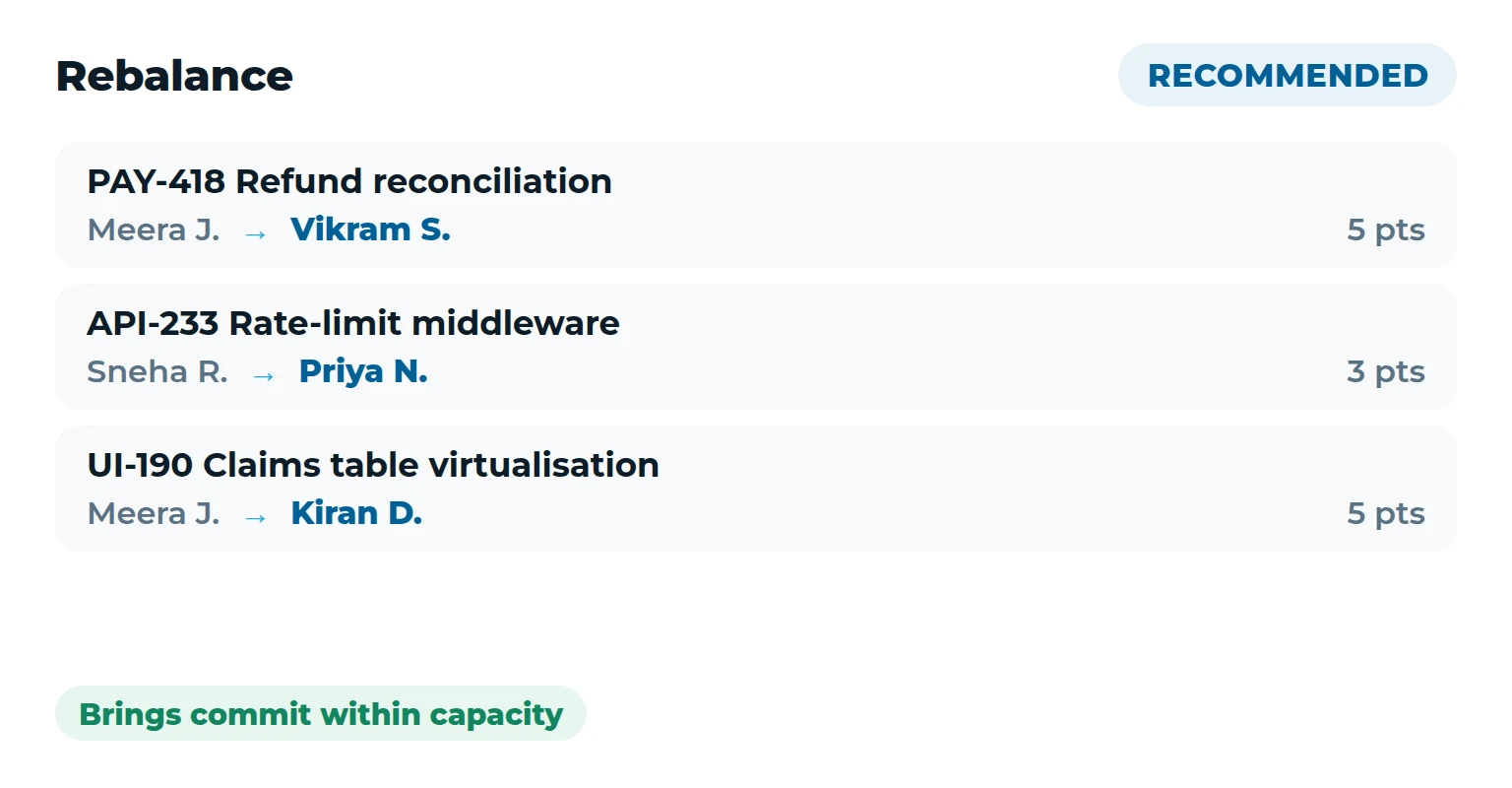
Workload balancing, dynamic sprint buffers, and planning adjustments are suggested proactively.
Measurable delivery gains.
30–40% fewer sprint spillovers and 25–35% better estimation accuracy, observed across Kalpita’s own delivery teams and early deployments.
A Kalpita hackathon-to-product story.
one more offering in Kalpita’s growing portfolio of AI products and solutions.
Summary
You can’t commit a team you can’t measure.
In many organizations, sprint planning runs on assumptions rather than actual availability — and the result is overloaded engineers, missed deadlines, spillovers, and unpredictable delivery. Kalpita SprintMind replaces the guesswork. It integrates with Azure DevOps and calendar systems to collect sprint, workload, meeting, holiday, and leave data, then automatically calculates true team capacity, analyzes historical performance, predicts delivery risk, and recommends better planning decisions. Built at a Kalpita hackathon and developed into a complete platform, SprintMind turns sprint planning into a data-driven process — balanced workloads, sharper estimates, fewer spillovers, and more predictable outcomes.
Product profile
At a glance
Kalpita SprintMind is a Kalpita product, built for agile-driven organizations where multiple teams, complex sprint cycles, and distributed resources make capacity planning hard.
- Product
- Kalpita SprintMind
- Industry
- Information technology and software development — digital product teams, engineering services, and technology consulting.
- Users
- Project managers, scrum masters, engineering managers, product owners, and development teams.
- Size
- Medium to large enterprises running many concurrent sprints with cross-functional, distributed teams.
- Core challenge
- Capacity estimated by assumption, uneven workloads, missed deadlines, and limited visibility into real availability.
- Origin
- Built at a Kalpita hackathon, developed into a full product
Technical approach
The engineering behind the platform
- Integration-first by design
- SprintMind reads the systems teams already use — Azure DevOps for sprint and backlog data, Outlook and calendar APIs for meetings and time away, and HR or resource-management systems for leave and allocation — and adds an analytics and prediction layer on top. Nothing changes in how teams work day to day, which is what makes adoption realistic.
- Learns from your history, not a benchmark
- Current availability is combined with your teams’ own past sprint performance, so the forecast reflects how your organization actually delivers rather than an industry average.
- Delivery
- Deployed on enterprise cloud infrastructure with standard containerized delivery.
- Shared under NDA
- Capacity computation, weighting, prediction methodology and recommendation logic are shared under NDA during a technical evaluation.
The challenge
The problem we solved
Sprint capacity was an assumption: meetings, planned leave, holidays and split allocations never made it into the number teams committed against.
Planning a sprint without real availability data is planning to spill over.
Assumed
planning relied on manual calculations rather than actual availability.
Hidden gaps
meetings, planned leave, holidays, and split responsibilities made estimates inaccurate.
Uneven
some engineers were overloaded while others were underused.
Spillover
unrealistic commitments pushed unfinished work into the next sprint.
Too late
capacity shortages, estimation deviations, and delays surfaced too late to fix.
The solution
Capacity computed from evidence, risk flagged before it lands.
Kalpita built SprintMind as a layered platform that turns fragmented project and availability data into actionable sprint intelligence.
Automated capacity calculation
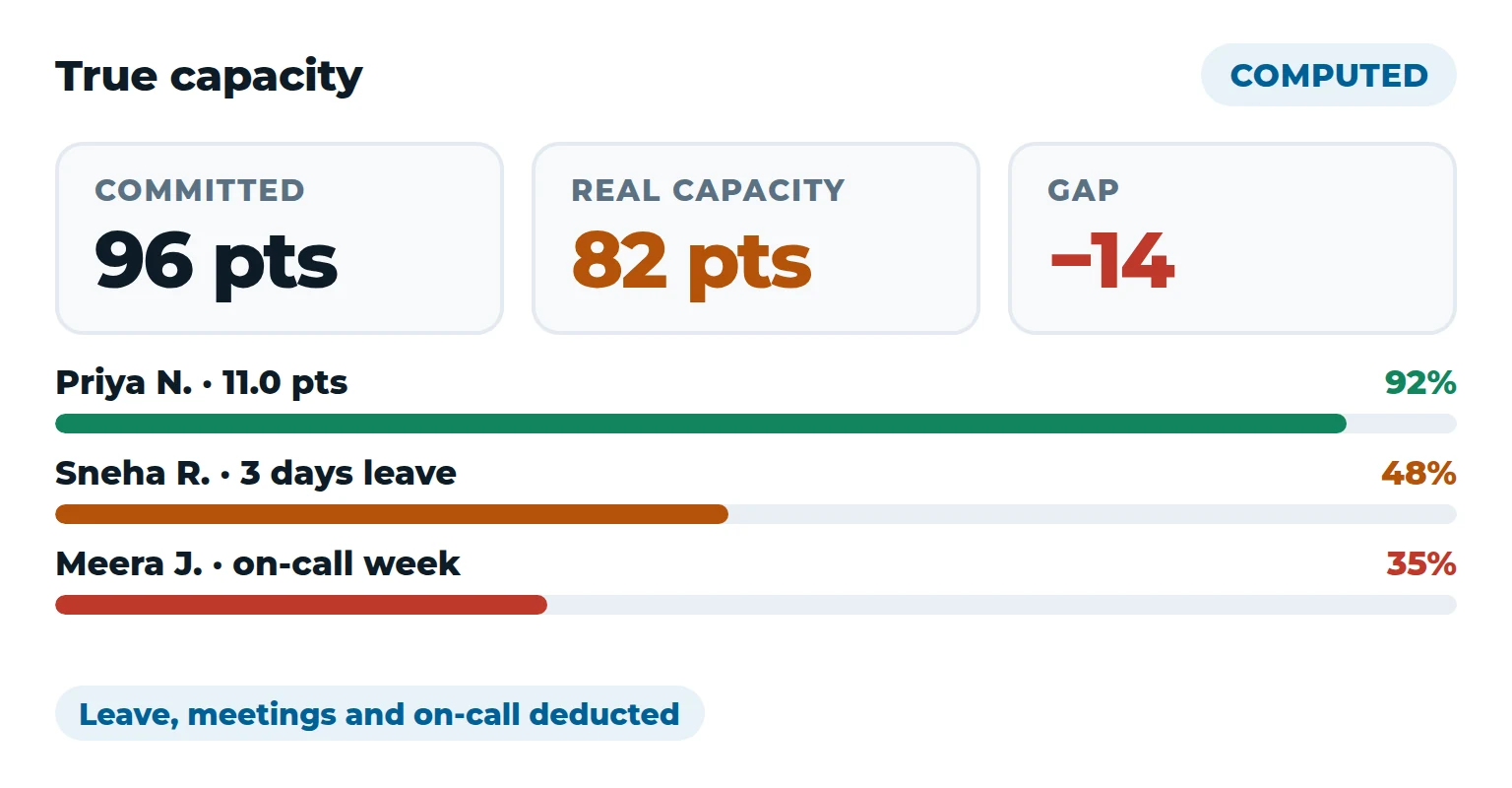
Real developer availability from working days, meeting hours, planned leave, allocation percentages, and multiple responsibilities.
Project & calendar integration
Syncs sprint, workload, meeting, leave, and holiday data from Azure DevOps and enterprise calendars.
Team capacity aggregation
Individual availability rolls up into accurate, realistic team-level sprint capacity.
Predictive risk detection
AI identifies overloaded resources, capacity shortages, estimation deviations, and likely delays before they affect delivery.
Intelligent recommendations
Workload rebalancing, dynamic sprint buffers, and planning adjustments based on current conditions and history.
Real-time dashboards
Sprint health, capacity utilization, workload distribution, estimation variance, and delivery confidence at a glance.
Inside the product
What ships in SprintMind
The platform reads the systems a team already uses, then turns them into a capacity number the team can actually commit to.
Automated capacity calculation
true availability, not assumptions.
Project & calendar integration
Azure DevOps and enterprise calendars in sync.
Team capacity aggregation
realistic, roll-up sprint capacity.
Predictive risk detection
overload, shortages, estimation drift, and delays flagged early.
Workload distribution analysis
balance across the team to reduce overload and idle time.
Historical sprint analytics
past performance and trends sharpen forecasting.
Intelligent recommendations engine
rebalancing, buffers, and planning adjustments.
Real-time sprint-health dashboard
status, utilization, variance, and delivery confidence.
Inside Kalpita SprintMind
Results
What SprintMind delivers, measured
The gains below come from replacing manual capacity math with computed availability, then acting on the risk signals it exposes.
Planning effort
30–50%
50% less manual sprint-planning effort through automated capacity calculation.
Estimation accuracy
20–35%
35% better estimation accuracy from historical analysis and predictive insight.
Sprint spillovers
25–40%
40% fewer sprint spillovers via realistic commitments and earlier risk detection.
Resource utilization
15–30%
30% better resource utilization and delivery predictability from workload balancing.
Risk detection
Earlier
capacity shortages and estimation deviations caught before delivery.
Decisions
Proactive
real-time dashboards replace spreadsheets and status calls.
Conclusion
Plan the sprint you can actually deliver.
SprintMind solves one of agile delivery’s most common failures: planning sprints on assumptions instead of real capacity. By unifying sprint data, calendars, availability, and historical performance, then predicting risk and recommending action, it shifts teams from reactive firefighting to proactive, data-driven planning — fewer spillovers, sharper estimates, and more predictable delivery. It is one more product graduating from Kalpita’s hackathon-to-product pipeline.
FAQ
Frequently asked questions

See it live
Plan your next sprint on real capacity.
Book a 30-minute demo of Kalpita SprintMind and see your true team capacity, delivery risks, and rebalancing recommendations from your own Azure DevOps and calendar data.