Product Case Study · DevOps & Agentic AI
Plain English into a production Azure pipeline — that heals itself.
From a Kalpita hackathon build to Kalpita PromptOps: a fully developed autonomous DevOps product that generates Azure CI/CD pipelines from natural language and fixes failures before they delay a release.
95%
faster onboarding and setup
< 60 sec
failure resolution
~0%
pipeline-definition errors
~$120K+
modeled cost saving
Overview
Six things PromptOps changes about DevOps
DevOps you can talk to.
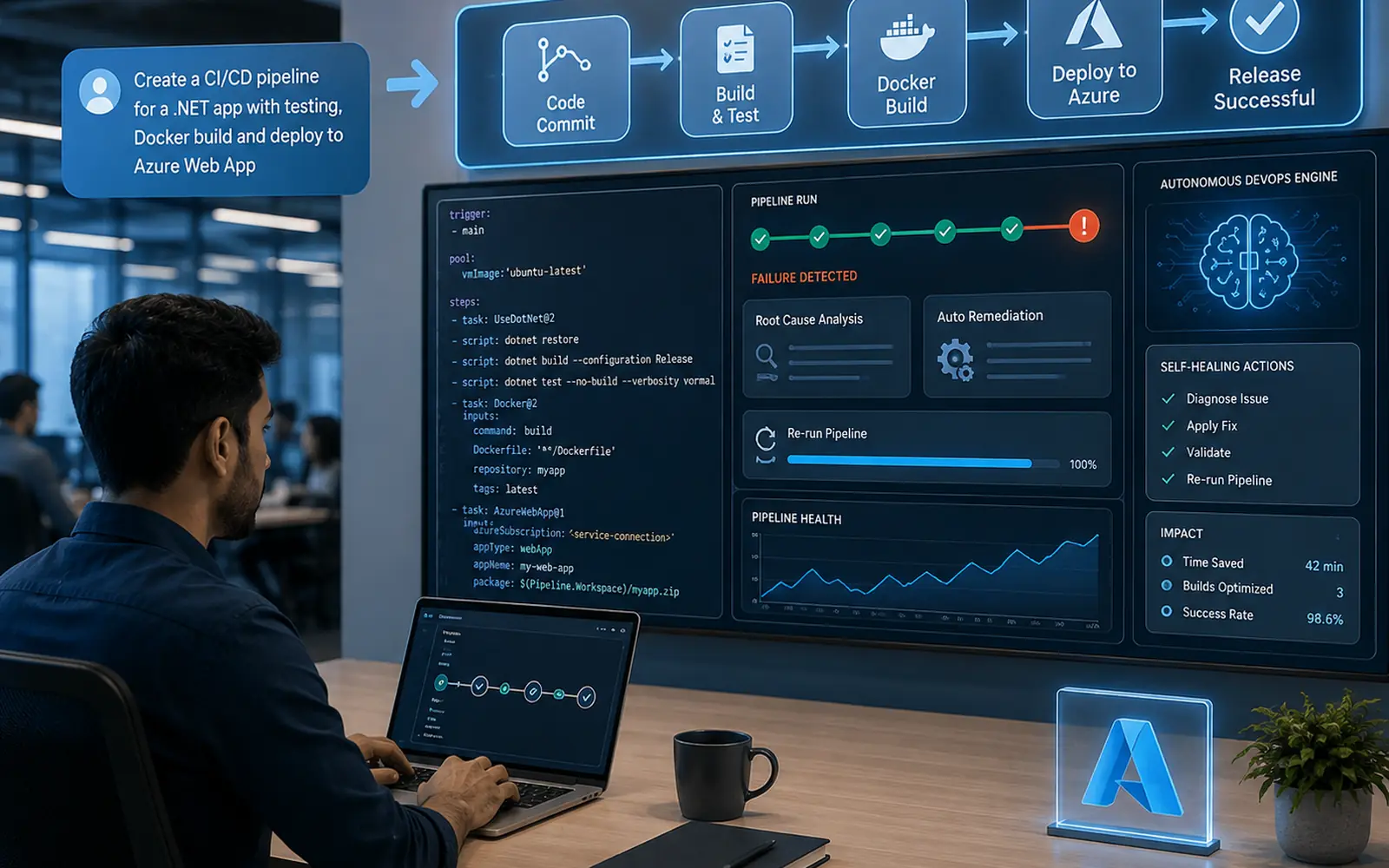
PromptOps turns a plain-English request into a working Azure CI/CD pipeline — no hand-written YAML.
Self-healing pipelines.
Common pipeline failures are detected and resolved automatically, often within a minute, before they delay a release.
95% less setup time
And a near-zero pipeline-definition error rate, removing the single biggest source of pipeline drift.
Conversational operations.
Run DevOps actions through chat, with validation and governance guardrails on every change.
Human-in-the-loop by design.
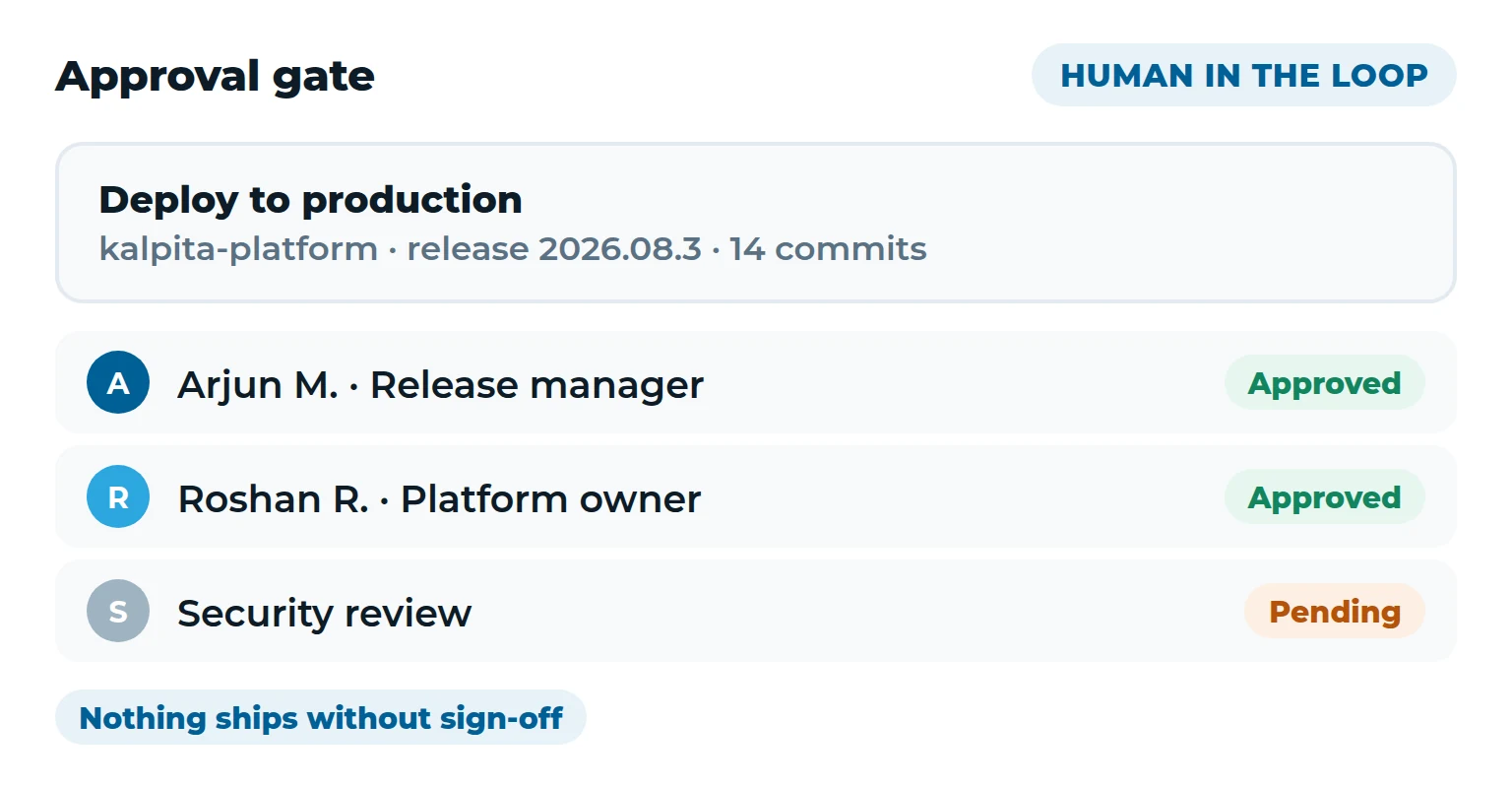
Approval workflows keep engineers in control of what reaches production.
~$120K+ in modeled cost savings.
and one more product in Kalpita’s growing portfolio of AI products and solutions.
Summary
Describe the pipeline. PromptOps writes it, runs it and fixes it.
PromptOps puts an intelligent automation layer over Azure DevOps. Engineering teams describe what they want in plain English; PromptOps generates the pipeline, validates it against governance rules, and runs it. When something breaks, AI agents analyze the logs and fix the issue automatically — typically in under a minute — instead of paging an engineer. Built at an Azure hackathon and developed into a complete platform, PromptOps cuts pipeline complexity, reduces dependence on scarce DevOps specialists, and accelerates delivery without surrendering control: every change passes through validation, governance, and human approval.
Product profile
At a glance
Kalpita PromptOps is a Kalpita product, built for large enterprises running cloud-native applications and microservices, where CI/CD pipelines are the backbone of delivery and any failure ripples across teams.
- Product
- Kalpita PromptOps
- Industry
- Technology / cloud / software engineering.
- Size
- Large enterprise, high-scale engineering teams managing many pipelines across environments.
- Core challenge
- Complex YAML, frequent pipeline failures, heavy dependence on specialist DevOps engineers, and high mean time to repair (MTTR).
- Origin
- Built at a Kalpita hackathon, developed into a full product
Technical approach
The engineering behind the platform
- Azure-native
- PromptOps builds on Microsoft’s Azure AI and Azure DevOps platform services and uses Microsoft Entra ID for identity and access, so it fits an existing Microsoft estate rather than sitting beside it.
- Standard, portable definitions
- PromptOps generates standard Azure pipeline and infrastructure definitions, so its output stays readable, reviewable and portable — there is no proprietary pipeline format to migrate away from later.
- Policy-checked before execution
- Generation and remediation are both policy-checked before execution, so an automated change is verified against the organization’s rules before it can run, and anything sensitive is routed to a human.
- Shared under NDA
- Orchestration design, diagnosis logic, validation rule structure and model configuration are covered under NDA during a technical evaluation.
The challenge
The problem we solved
Hand-written YAML made every new service slow to onboard, and a single failed pipeline could stall a release for hours while a specialist diagnosed it.
Modern delivery runs on pipelines, but the pipelines themselves have become a bottleneck.
YAML
yAML complexity increases cognitive load and slows every new service onboarding.
Failures
frequent pipeline failures delay releases and break delivery momentum.
Bottleneck
dependence on specialist DevOps engineers creates a bottleneck and a single point of failure.
High MTTR
diagnosing and fixing a failed pipeline can stall a release for hours.
Drift
infrastructure inconsistencies across environments cause configuration drift and unpredictable behavior.
The solution
Conversational DevOps with agents that fix their own failures.
Kalpita built PromptOps as an AI automation layer on Azure-native services, with five capabilities working together.
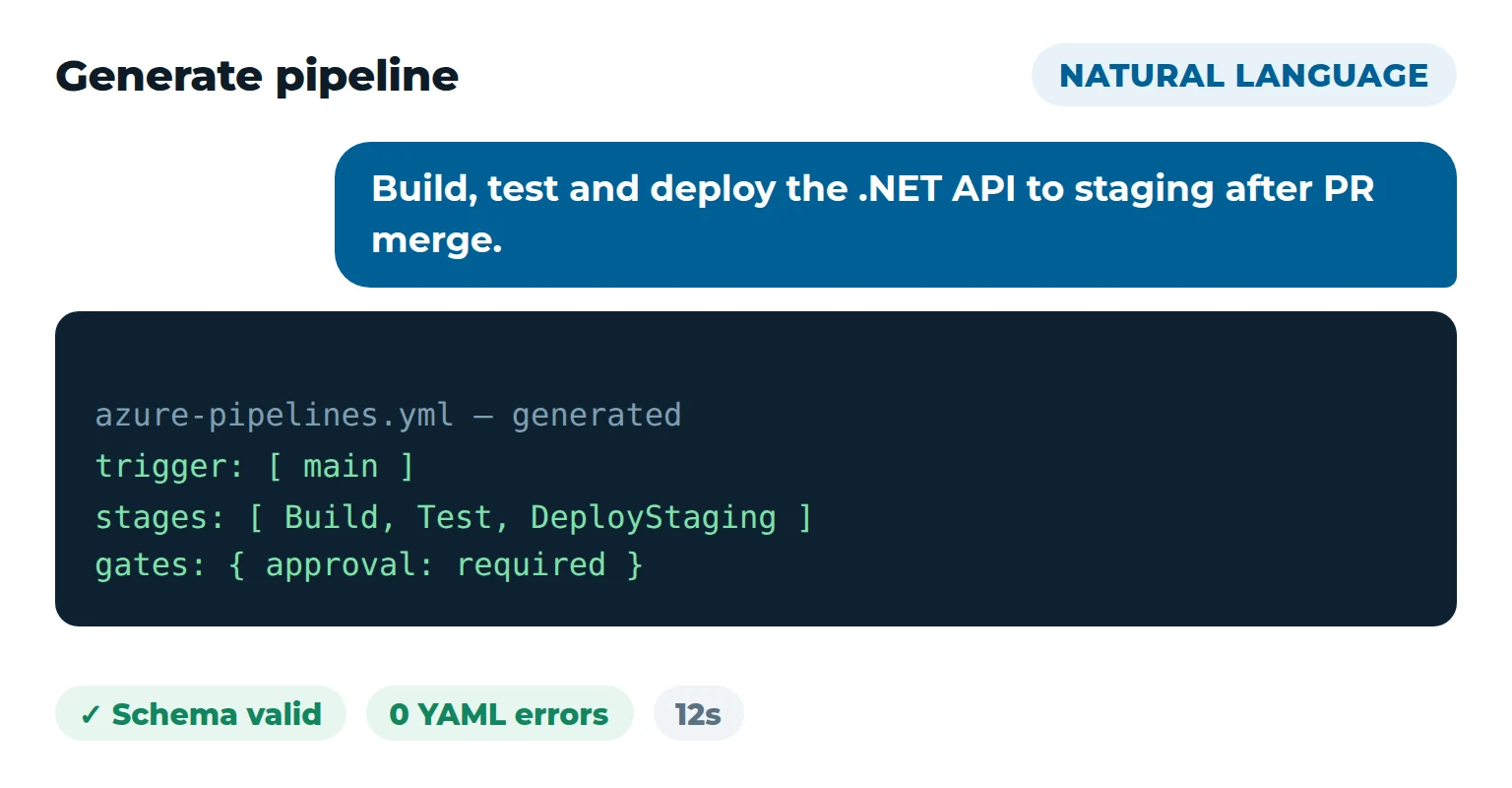
Natural-language pipeline generation
Describe the workflow in plain English; PromptOps writes the pipeline.
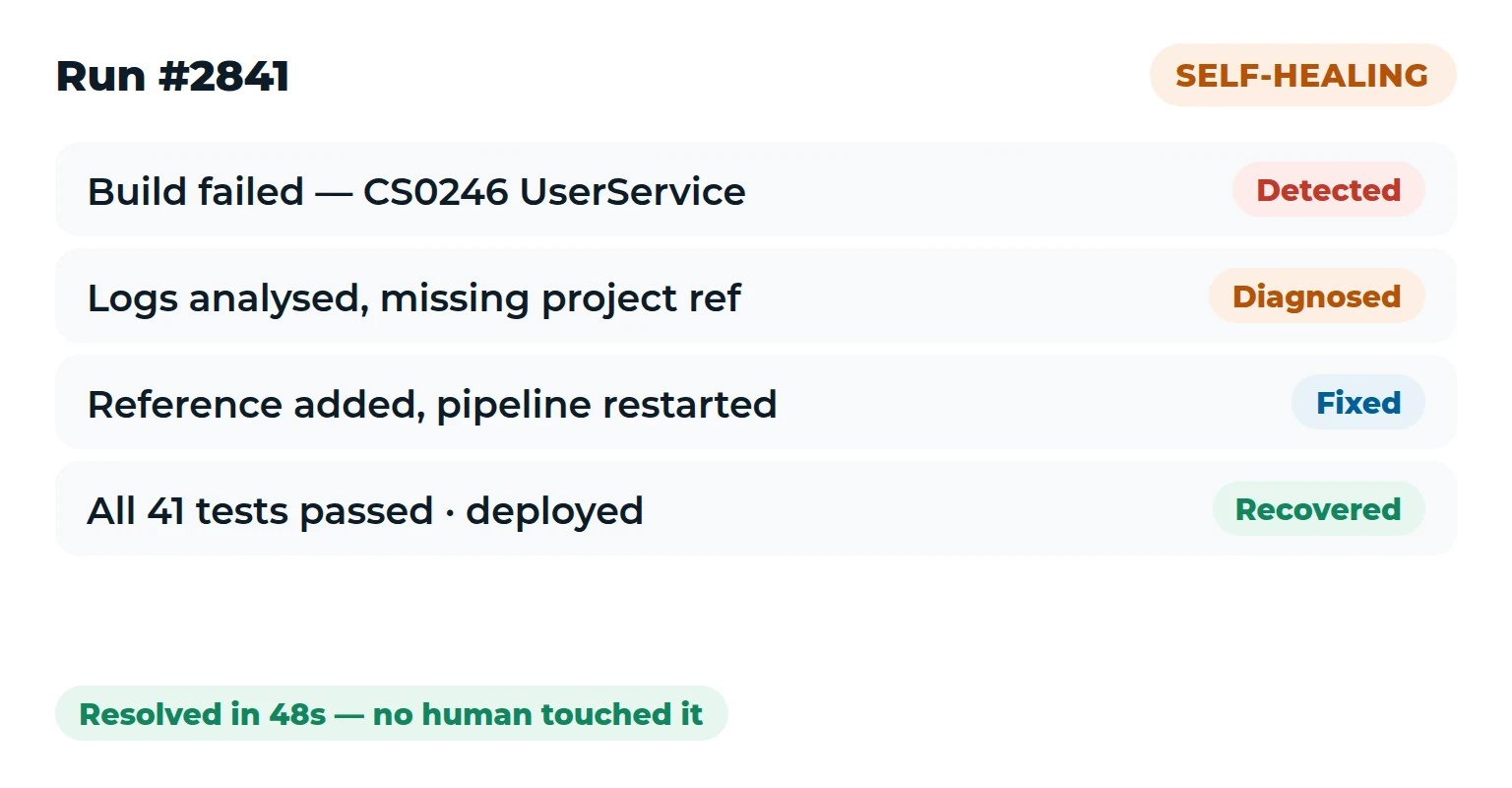
Autonomous log analysis and failure fixing
PromptOps diagnoses failures and resolves the classes it handles in under 60 seconds; anything else is escalated with a diagnosis attached.
Conversational DevOps interface
Trigger and manage operations through chat, not consoles.
Integrated validation and governance
Automated checks enforce compliance and reliability on every change.
Human-in-the-loop approval workflows
Engineers approve sensitive actions before they reach production.
Inside the product
What ships in PromptOps
Generation is only half of it. The platform stays with the pipeline through every run, failure and fix.
AI-generated pipelines from prompts
plain-English to production-ready CI/CD.
Self-healing pipeline execution
automatic detection and resolution of failures.
Chat-based DevOps actions
conversational control over builds, releases, and operations.
Compliance and governance guardrails
automated validation on every change.
Real-time insights and automation
live pipeline health and proactive recommendations.
Inside Kalpita PromptOps
Results
What PromptOps delivers, measured
The platform was built against the two costs every engineering leader recognizes: time lost to YAML, and time lost to broken pipelines.
Onboarding
95%
pipeline creation from a plain-English prompt instead of hand-written YAML.
Failure resolution
< 60 sec
self-healing pipelines fix issues before they delay a release.
Definition errors
Near-zero
automated generation and validation remove configuration drift.
Cost saving
~$120K+
~$120K+ in modeled cost savings from reduced manual effort and specialist dependence
Deployment reliability
Higher
consistent, governed pipelines across environments.
Developer productivity
Improved
engineers ship features instead of debugging YAML.
Conclusion
DevOps shouldn’t require a translator.
PromptOps redefines DevOps from a specialist craft into a conversation. By generating pipelines from intent, healing failures automatically, and enforcing governance on every change, it removes the complexity and fragility that slows cloud-native delivery — while keeping engineers in command through human approval. It is one more product graduating from Kalpita’s hackathon-to-product pipeline.
FAQ
Frequently asked questions

See it live
Describe a pipeline. Watch it build itself.
Book a 30-minute demo of Kalpita PromptOps and see a plain-English request become a governed Azure pipeline that heals its own failures.