Autonomous Machine Revolution & Rise of Machine Agency - 2026
TL;DR

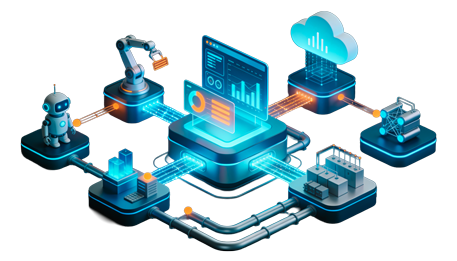
The Autonomous Machine Revolution marks a shift from traditional automation to machine agency, where machines perceive, decide, act, learn, and transact independently without human intervention.
Enabled by the convergence of AI, IoT, advanced robotics, 5G/edge computing, and blockchain, machines are evolving into economic actors within a growing machine-to-machine (M2M) economy.
Real-world deployments such as autonomous tractors, self-refueling logistics fleets, and smart factories prove how machines now collaborate, negotiate payments, and self-improve at scale.
This transformation unlocks 20–30% cost savings, higher productivity, sustainability gains, and new business models, including robot-as-a-service and decentralized machine marketplaces.
However, it introduces critical challenges around ethics, liability, cybersecurity, governance, workforce transition, and value alignment, requiring urgent regulatory and societal frameworks.
The future depends on responsible design and governance, positioning humans as strategists, ethicists, and overseers, ensuring autonomous systems align with human values rather than purely economic optimization.
Key Takeaways
Machine Agency is the Next Phase of Automation: Autonomous machines move beyond rule-based automation to independent decision-making using AI, real-time data, and adaptive learning models.
AI and IoT Are the Core Enablers of Autonomy: Artificial intelligence, IoT sensors, robotics, and edge/cloud computing form the foundational stack enabling autonomous operations at scale.
Autonomous Machines Drive Operational Efficiency: Continuous operation, predictive maintenance, dynamic scheduling, and self-optimization reduce downtime and improve asset utilization.
The Machine-to-Machine Economy Is Emerging: Decentralized ledgers provide secure, auditable, and tamper-resistant infrastructure for machine-to-machine payments and agreements.
New Business Models Are Being Created: Models such as Robot-as-a-Service, outcome-based pricing, and autonomous asset monetization are reshaping enterprise value chains.
Governance and Ethics Are Critical to Scale Autonomy: Explainable AI, human-in-the-loop controls, accountability frameworks, and regulatory standards are essential to mitigate risk and ensure trust.
Cybersecurity Becomes a Strategic Priority: Economically autonomous machines increase the attack surface, making secure identities, resilient architectures, and continuous monitoring mandatory.
The Future of Work Is Human-Centered, Not Machine-Replaced: Humans transition into system designers, supervisors, ethicists, and decision architects while repetitive execution shifts to machines.
Leadership Decisions Will Shape Outcomes:The autonomous machine revolution will benefit society only if organizations intentionally embed human values into autonomous systems.
Relevant Article

IT Trends 2025-2030

Behavioural Design Pattern
Introduction to Design Patterns
Kalpita Technologies® is a Registered Trademark © 2026 All Rights Reserved.